What Happens When the Investment Process Lives in One Person’s Head?

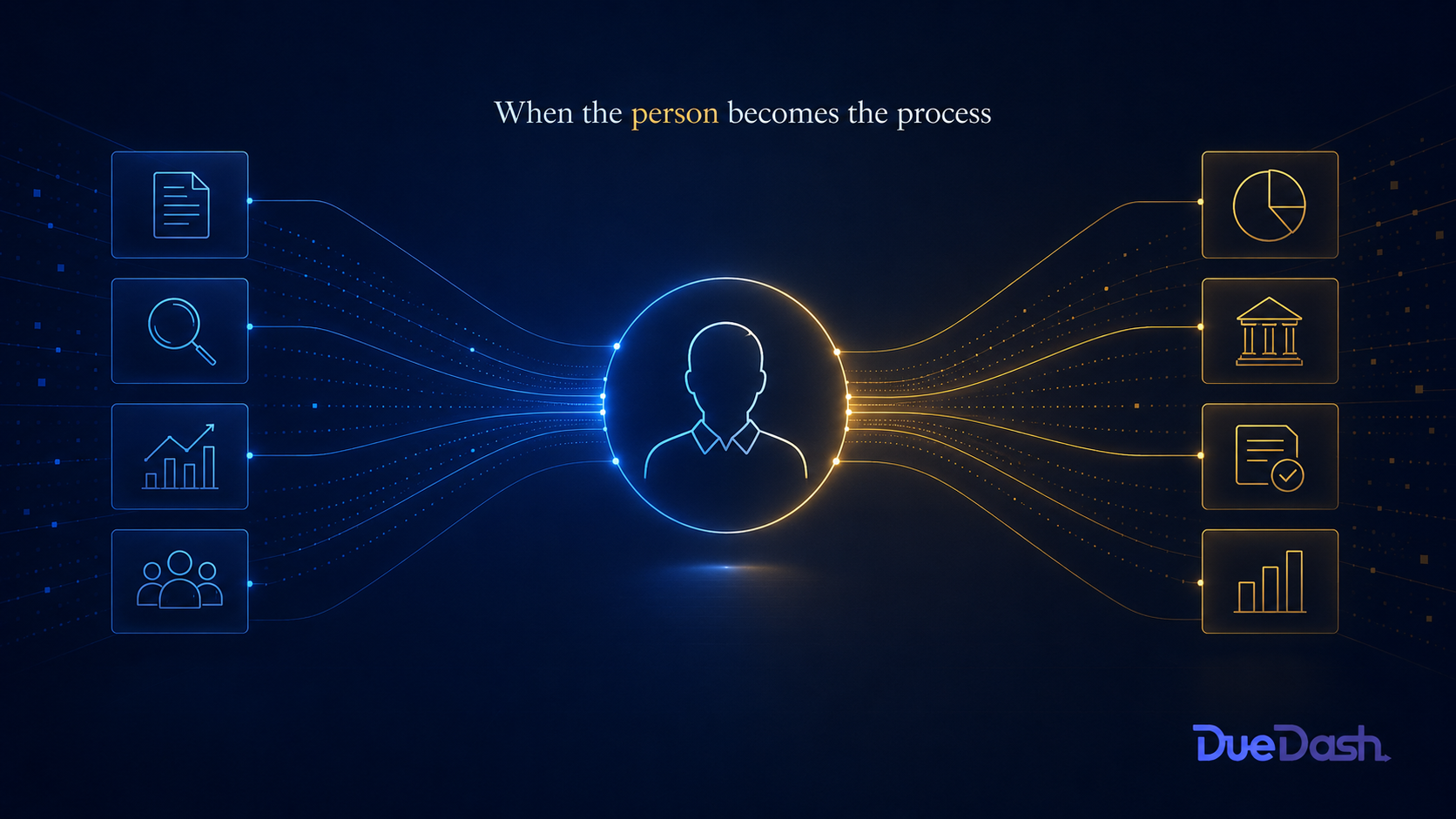
In many family offices, the investment process works perfectly well for years. A principal builds the portfolio over time. They know intuitively which opportunities deserve a second look, which risks feel wrong, when the numbers do not tell the whole story, and when an exception is worth making. The team learns how they think. Deals…

Why Institutional Memory Is Becoming a Hidden Risk in Private Capital

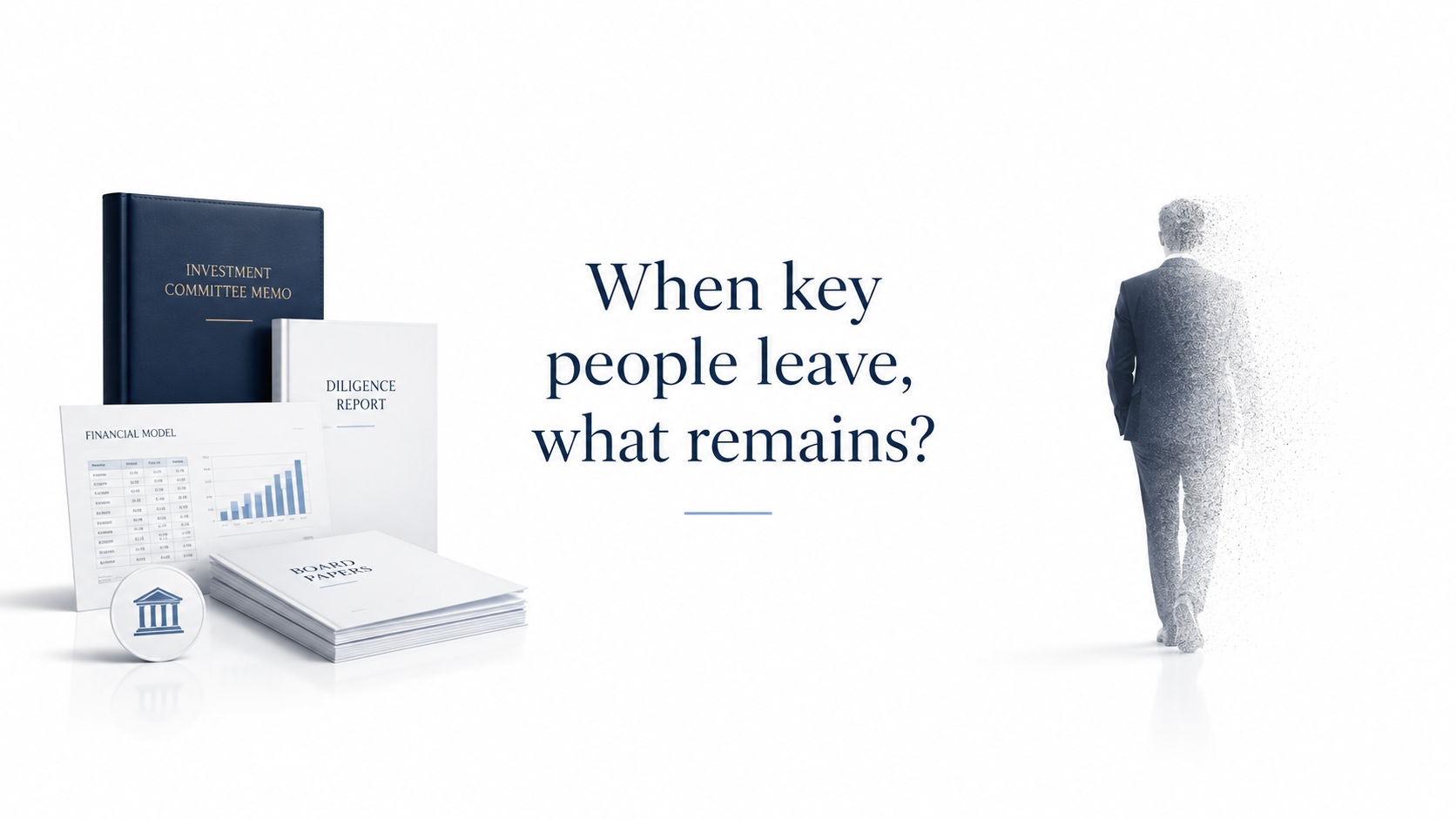
A senior investment professional leaves after years with a firm. A few months later, a new partner reviewing a follow-on investment asks why a particular risk was accepted three years earlier. The IC memo is there. So are the model, the diligence reports, and the board papers. What is harder to recover is what everyone…

Does Your Investment Committee Preserve Judgement?

An investment committee approves a deal. The memo is filed. The vote is recorded. The investment rationale is clear. Eighteen months later, something changes. Perhaps the portfolio company needs additional capital. A covenant needs to be amended. An LP asks about the original underwriting. Or a new partner wants to understand why the firm became…

AI Is Changing Due Diligence. Can Your Investment Process Keep Up?

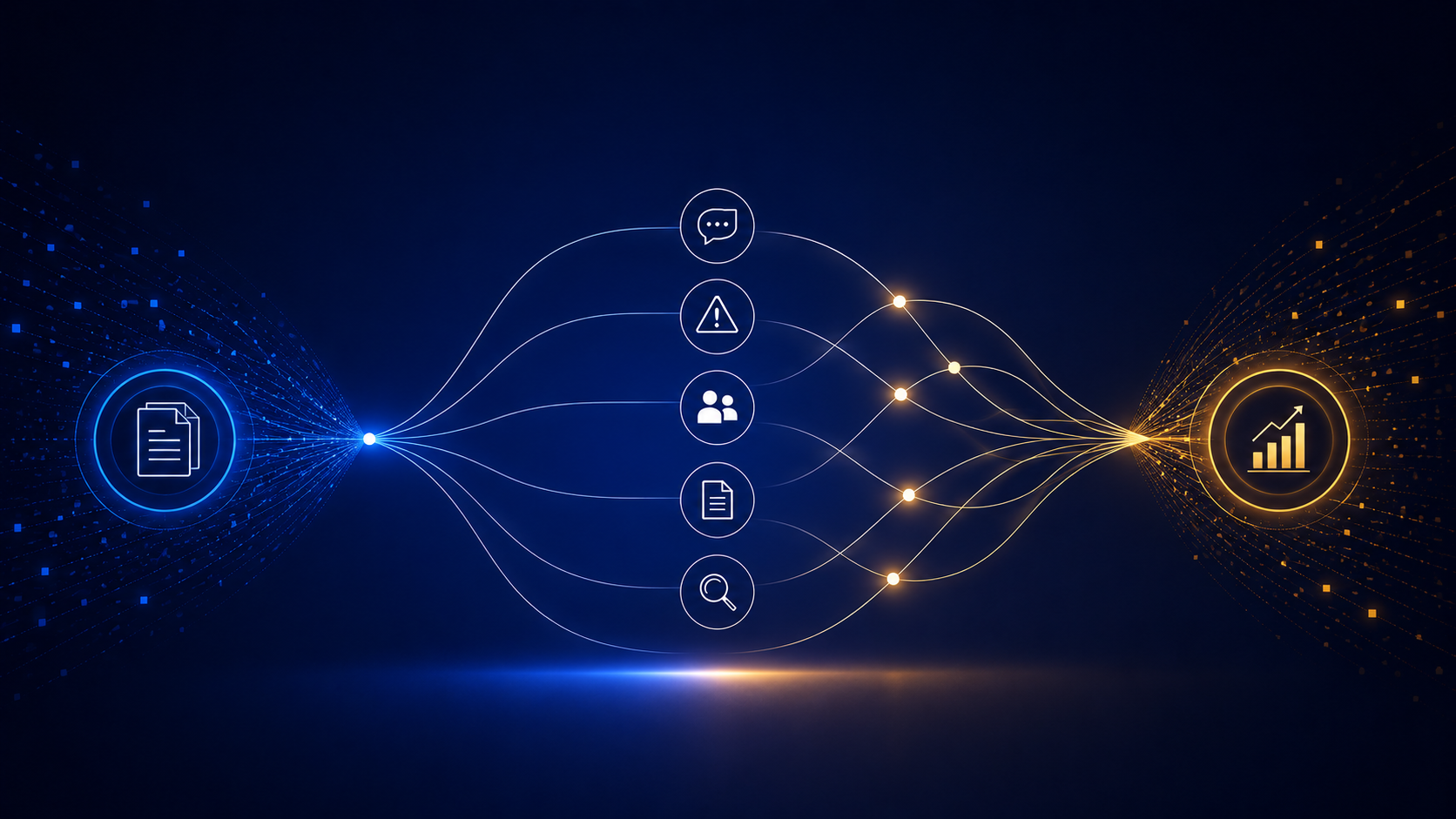
A mid-market private equity firm adopts AI-assisted diligence. Analysts review more documents, extract more data, and identify more risks across more deals. On one investment, the AI-generated ESG summary captures the headline risks but misses a material disclosure buried in a subsidiary filing: historical contamination at a site the fund intends to redevelop. Eighteen months…

LP question that every manager eventually gets

The meeting is a Fund II first close. The GP is prepared. The track record is strong. The investment thesis is clear. Every expected question has been anticipated. The institutional LP reviews the materials, looks up, and asks: ‘Before we go further, can you walk us through your review process on Deal X from Fund…

Why AI Governance Is Shifting from Outcome Accountability to Process Defensibility

For years, organisations have been judged primarily by outcomes. Did the decision comply? Was the control framework in place? Did it achieve the required result? Increasingly, a different question is emerging: Can you demonstrate how the decision was reviewed before it was made? DORA and the EU AI Act didn’t create this shift. They reflect…

Generating AI vs preserving evidence

AI Summaries Are Not Institutional Evidence

Late 2024. A mid-market private equity firm completes a cross-border acquisition using AI-assisted due diligence. Thousands of documents are reviewed, risks are summarised, and the Investment Committee approves the transaction with confidence. Eight months later, a limited partner asks a different question. Not about the investment thesis. Not about the final decision. But about how…

Generated output vs institutional evidence

Generated Output vs Institutional Evidence

A sovereign wealth fund’s operational due diligence team is reviewing a mid-market private equity GP. The GP has invested heavily in AI across diligence, research, document review, and investment analysis.   But the due diligence team is now not asking about the AI tools. They are asking about the governance of the AI tools.  …

startup moving

DataVault moving to DueDash

We want to let you know about an important change: we are shutting down DataVault and moving its functionality, and much more, into DueDash. As of today, DataVault will no longer operate as a standalone platform. Instead, all its features and new capabilities can be accessed directly via DueDash. Why we made this change DataVault…

Non-Human Inventor

Statutory Text, Legal Personhood, and the Non-Human Inventor: Why Formalism Has (So Far) Prevailed

Abstract Can an artificial intelligence (AI) system be an “inventor” under contemporary patent statutes? Across leading jurisdictions, courts and patent offices have converged on “no,” grounding outcomes in textualist readings of inventor provisions that presuppose a natural person. This article analyzes the Full Federal Court of Australia’s reversal in Commissioner of Patents v Thaler FCAFC…