

A mid-market private equity firm adopts AI-assisted diligence. Analysts review more documents, extract more data, and identify more risks across more deals.
On one investment, the AI-generated ESG summary captures the headline risks but misses a material disclosure buried in a subsidiary filing: historical contamination at a site the fund intends to redevelop.
Eighteen months later, the issue surfaces.
The LP asks a simple question:
How was the AI analysis reviewed before the investment was approved?
The AI output exists. The diligence report exists. The IC memo exists.
The record of human judgement between them does not.
The Distinction
AI allows investment teams to review more, faster.
But more analysis also means more judgement to preserve.
The problem isn't the volume of AI output.
It's whether the institution can show how that output was reviewed before it shaped an investment decision.
What Is Diligence Governance — and Why Is It Different from Diligence Coverage?
Diligence governance is the documented record of how analysis was reviewed before it informed an investment decision: what was reviewed, who reviewed it, what was challenged or changed, what was escalated, and how that process shaped the final IC recommendation.
Diligence coverage is different.
It describes the breadth of the work: the documents reviewed, data analysed, risks identified and questions examined.
AI has significantly expanded that coverage. Investment teams can process more information across more deals, faster.
But more coverage does not automatically create better governance.
An AI-generated diligence report may show what was analysed. It does not necessarily show how the analysis was reviewed, challenged or validated by human judgement before the investment decision was made.
That is the distinction:
Diligence coverage shows what the institution examined.
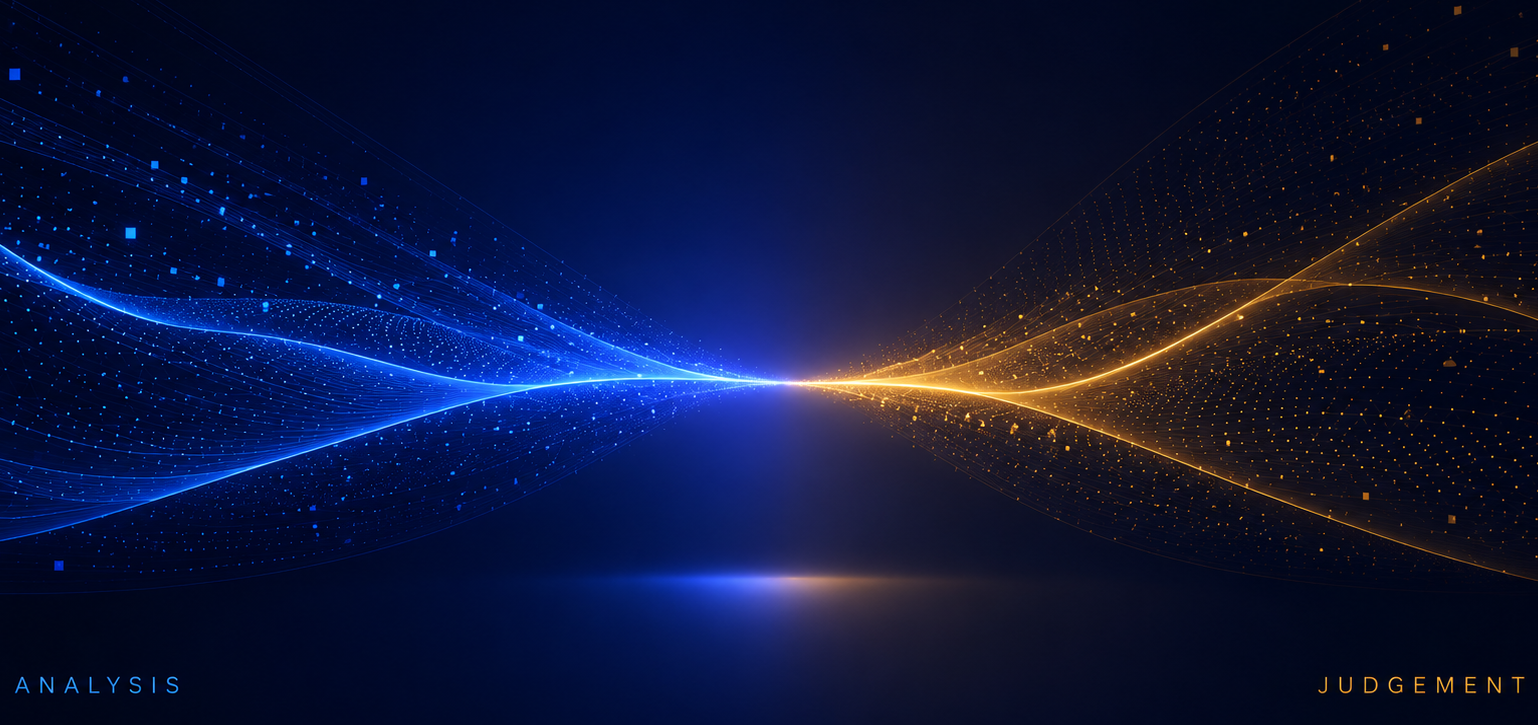
Diligence governance shows how the institution exercised judgement.
Institutional investors increasingly need confidence in both.

When Analysis Scales Faster Than Review
AI allows investment teams to analyse more information across more deals.
But every additional AI-generated finding creates another question:
How was it reviewed before it influenced the investment decision?
That is where the evidence can start to thin.
The AI output may be preserved.
The diligence report may be preserved.
The IC recommendation may be preserved.
What is less consistently preserved is the human judgement between them: who reviewed the analysis, what they challenged, what changed and why the final recommendation was trusted.
This is not an argument against AI-assisted diligence.
Quite the opposite.
AI can materially increase what an investment team is capable of examining.
But I’ve watched the same pattern play out across technology cycles before.
Capability scales quickly. Institutional memory rarely scales at the same speed.
Our work validating AI-assisted workflows with Deutsche Telekom reinforced the same lesson: generating analysis is easier than preserving the evidence of how that analysis was reviewed.
AI gives investment teams more to analyse.
It also gives institutions more judgement to preserve.

What Happens as AI Enters the Investment Process?
The question isn’t simply how much AI a fund uses.
It is whether the evidence of human judgement scales with it.
As AI moves deeper into diligence, the amount of analysis increases.
So does the amount of judgement worth preserving.
The question for a GP isn’t whether the firm uses AI.
It’s whether the firm can still show how human judgement shaped the investment decision.
Five Questions to Ask About Your AI-Assisted Diligence
Run these against your three most recent AI-assisted deals.
1. Reviewer attribution
Can you show which AI-generated outputs were reviewed by which investment professionals?
2. Human validation
If an LP challenged one AI-generated conclusion, could you show how it was reviewed and validated?
3. Changes during review
Can you show what changed between the initial AI analysis and the final IC recommendation, and why?
4. Source attribution
Can you trace important conclusions back to the source documents that informed them?
5. Institutional memory
If the analyst or partner responsible for the deal left tomorrow, could the review process still be reconstructed from the institutional record?
If the answers require searching email, finding meeting notes or asking someone to remember what happened, the problem is not the AI output.
It is the missing Institutional Evidence around the judgement.
What the Evidence Is Starting to Show
Institutional LPs already care about whether investment processes are governed, documented and repeatable.
AI adds another question to that diligence:
Can the manager show how human judgement was applied to AI-assisted analysis?
The question matters because preserving the final output is relatively easy.
Preserving the reasoning that produced it is harder.
Our work with Deutsche Telekom reinforced this pattern across complex review workflows: analysis could be preserved, while the history of how that analysis was reviewed was much harder to reconstruct.
Quake Capital helped validate the private-capital workflow from the investment side.
The underlying institutional problem was the same.
The question is not simply whether AI can produce useful analysis.
It is whether the institution can explain how that analysis became an investment decision.
More AI Means More Judgement to Preserve
Every new AI capability gives investment teams more to work with.
More documents.
More findings.
More comparisons.
More recommendations.
It also creates more judgement that may later need to be explained.
A fund reviewing fifteen deals with AI has not simply increased its analytical capacity.
It has increased the number of review decisions that may eventually need to be understood by an investment committee, LP, regulator or counterparty.
That is why the answer is not less AI.
It is better evidence.
The firms that scale AI well will not just preserve the output. They will preserve the judgement around it.
What More Institutional Funds Are Building
The funds handling AI-assisted diligence well are not necessarily the ones with the longest AI policies.
They are the ones that can answer a much simpler question:
What happened on this deal?
Which AI-generated analysis was reviewed?
Who reviewed it?
What changed?
What concerns were raised?
How did human judgement shape the final IC recommendation?
The objective is not more documentation.
It is preserving those answers as diligence happens rather than reconstructing them months or years later.
A policy tells you how the process should work.
Institutional Evidence shows how it actually worked.
Three things to do before AI scales further
Start with three deals
Take your three most recent AI-assisted investments.
Can you reconstruct how the AI analysis was reviewed, challenged and changed from documented records alone?
If someone has to search emails or ask the analyst who worked on the deal, you have identified what isn’t being preserved.
Separate what AI analysed from how people judged it
A comprehensive diligence report tells you what was examined.
It doesn’t necessarily tell you who questioned the analysis, what changed or why the final recommendation was trusted.
Preserve both.
Make the record scale with the analysis
As AI allows teams to review more information across more deals, there is more human judgement worth preserving.
Don’t make documentation another task for the investment team.
Capture the record as the work happens.
Frequently Asked Questions
How does AI change governance in private equity due diligence?
AI allows investment teams to analyse more information, faster. That also means more AI-assisted findings may influence investment decisions.
The governance question is whether the firm can later demonstrate how those findings were reviewed, challenged and validated by investment professionals before reaching the investment committee.
What is AI diligence governance?
AI diligence governance is the documented record surrounding AI-assisted analysis: the sources used, who reviewed the analysis, what changed during review, what was escalated, and how human judgement shaped the final investment recommendation.
How should private equity firms document AI-assisted due diligence?
Four elements matter: source attribution, reviewer accountability, decision chronology, and escalation.
The strongest record is created during diligence, not reconstructed afterwards.
What do LPs want to understand about AI-assisted diligence?
LP requirements are still evolving.
But as AI becomes part of the investment process, a straightforward diligence question follows:
How does the manager ensure human judgement remains accountable for the investment decision?
A documented record of sources, reviewers, changes and decisions gives a GP a much stronger answer than an AI policy alone.
The DueDash Distinction
DueDash preserves the Institutional Evidence around AI-assisted diligence: what was reviewed, who reviewed it, what changed, and how human judgement shaped the final investment decision.
The objective isn't more AI output. It's making sure the judgement behind that output doesn't disappear.
