
image

The Review Gap

Documents are retained. Decision evidence is not.

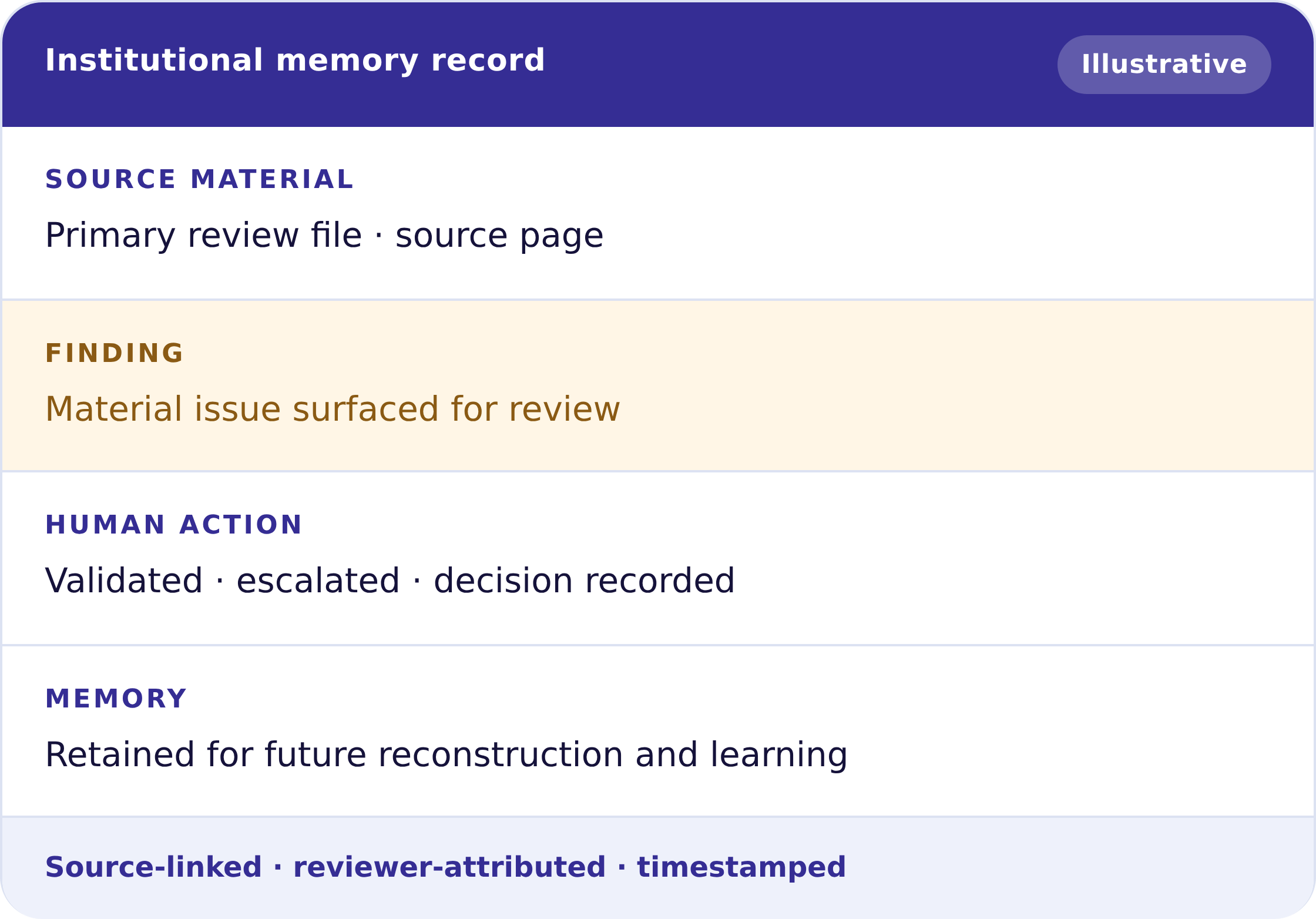
Most systems preserve files, messages, or final outputs. They do not preserve the full path of review: what was examined, what changed, what was challenged, who acted, why the decision was made, and what the institution learned.

Systems today

Review context scatters.

  • Documents live in one system.
  • Discussions happen in another.
  • AI outputs sit outside the decision record.
  • Human judgment is not retained in reusable form.
  • Teams reconstruct from memory when challenged.

DueDash

The review record holds.

  • Evidence, findings, reviewer actions, and decisions are preserved together.
  • AI-assisted findings remain source-linked.
  • Human validation and escalation are retained.
  • Each review adds to institutional memory.
  • The institution builds defensibility over time.

The institutional memory problem

AI makes analysis abundant. Institutional memory remains scarce.

The first wave of AI adoption gave individuals more analytical capability. Teams now generate more analysis faster. But without a shared evidence layer, the institution does not retain what was reviewed, what was found, who validated it, or why the decision was made. Organizations become more productive without necessarily becoming more coherent.

The challenge is no longer producing more analysis. The challenge is retaining what matters after the analysis is complete.

Built first in private capital. Now deployed across additional high-accountability review environments.

How it works

From review materials to institutional memory.

Review. Surface findings. Decide with attribution. Learn from retained history. Every workflow compounds into institutional memory.

1

Input

Documents & records

Documents, records, diligence files, or matter materials enter the workflow.

2

AI-assisted

Evidence review

AI-assisted review surfaces gaps, inconsistencies, risks, and findings with source links.

3

Evidence

Findings surface

Each finding links to its source document, page, and cross-reference.

4

Human

Human decisions

Reviewers validate, escalate, approve, or reject findings with attribution.

5

Memory

Governed record

The review record is timestamped, traceable, and retained.

6

Learning

Institutional learning

Repeated reviews compound into proprietary decision memory.

AI surfaces evidence, Humans remain accountable. DueDash preserves the record and helps the instititution learn.

Where it applies

One infrastructure. Multiple high-stakes review environments.

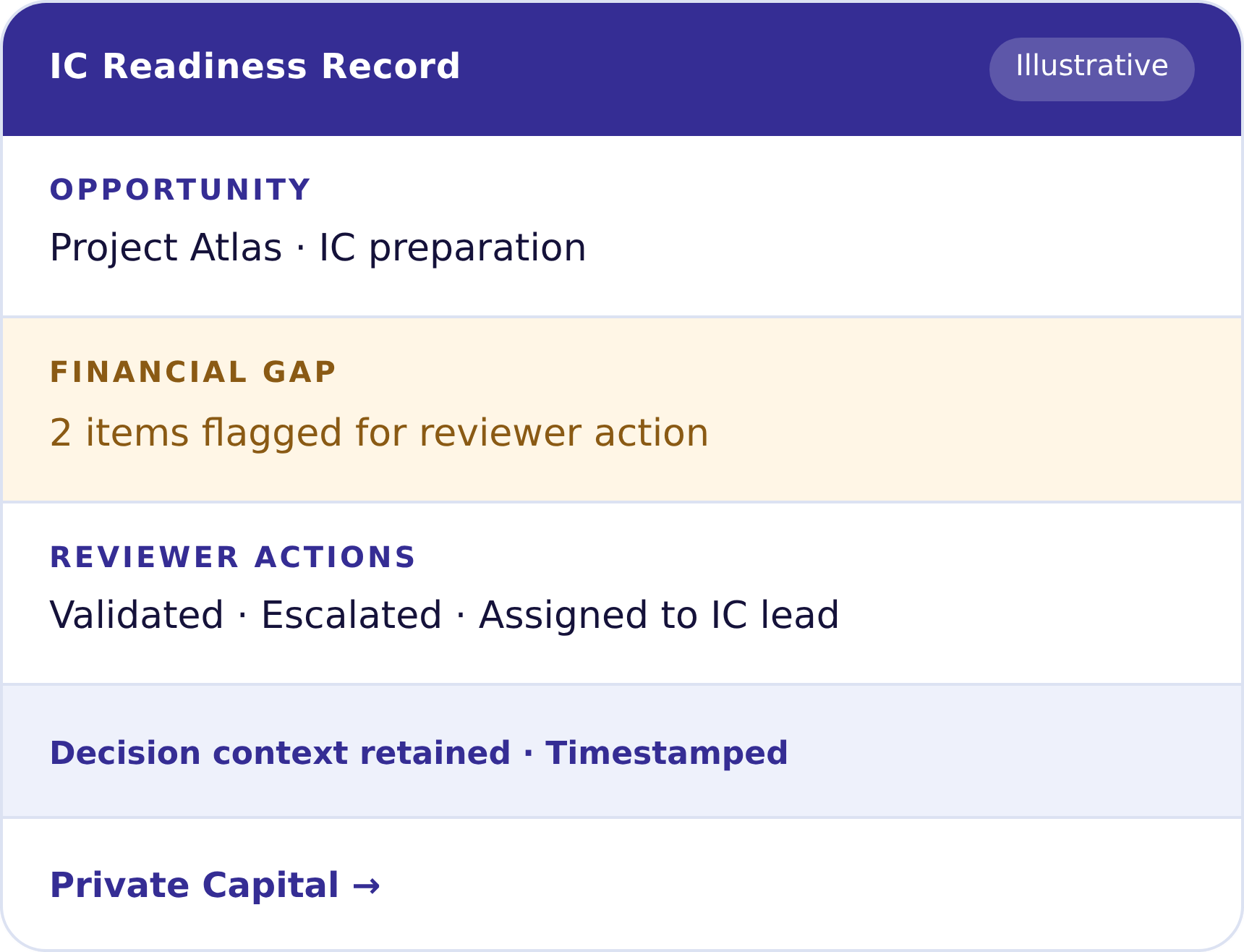
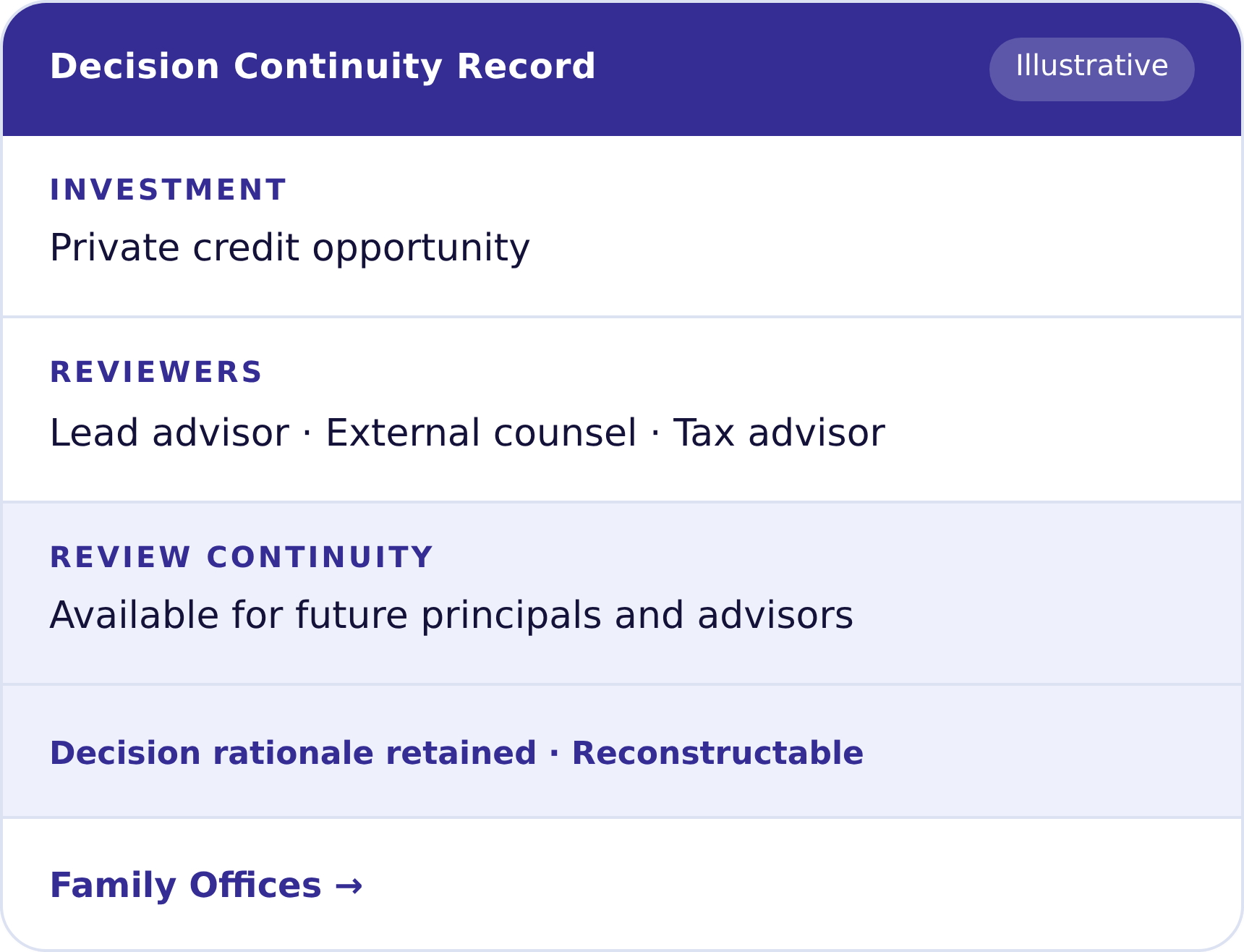
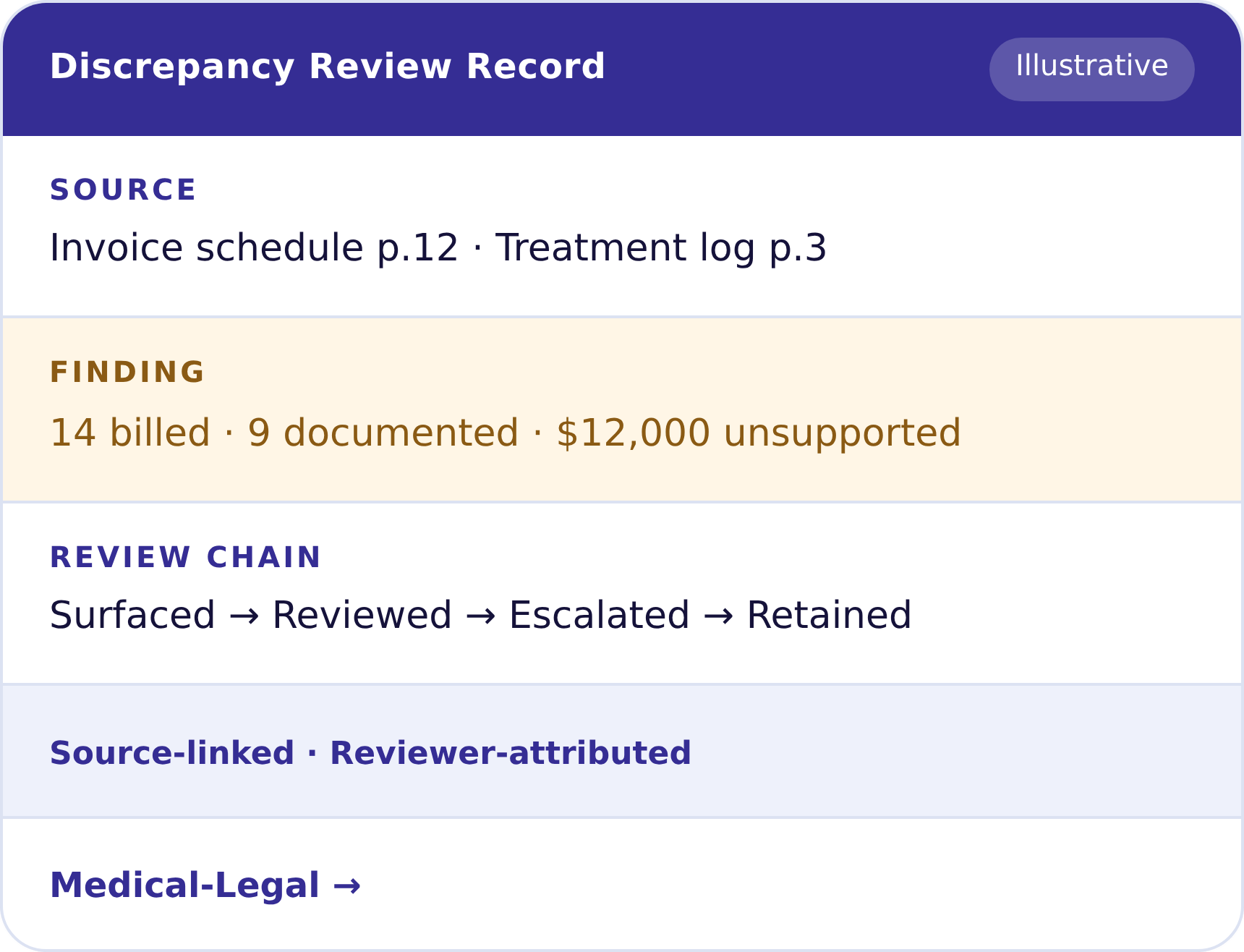
Each domain produces a different review artifact. The evidence architecture behind them is consistent.

IC Readiness Record
Decision Continuity Record
Discrepancy Review Record

Different domains. Same evidence architecture. See all six environments →

Trust & Security

Your data. Your evidence. Your institutional memory.

  • Logical tenant isolation and access controls
  • Encryption and auditability
  • Review history retained with attribution
  • Generated output separated from institutional evidence
  • Multiple deployment models aligned to customer requirements

Control is not only a security principle. It is how customers protect the institutional memory they are building.

One workflow. One week. One proof point.

Identify one review environment where coverage gaps create exposure. We process one anonymised matter and show what the system captures before any commitment to full deployment. Start small. Preserve the record. Let institutional memory compound.
